

You are parenting someone who is almost ready to leave.
Your job right now is to make sure they know how to come back.
The prefrontal cortex, the region of the brain responsible for judgment, impulse control, long-term thinking, and the ability to accurately assess risk, does not reach full maturity until the mid-twenties.
Your fifteen to eighteen year old is navigating college applications, romantic relationships, identity formation, peer pressure, and an increasingly complex digital world with a brain that is extraordinarily capable in some ways and still genuinely incomplete in others.
Neuroscience also tells us that the quality of the parent-teen relationship during these years is one of the strongest predictors of how young people navigate risk, mental health challenges, and the transition to adulthood.
Your teenager may not seem to need you.
They need you more than ever.
They just need you in a completely different way than they did ten years ago, and the research is clear that parents who learn that new way produce teenagers who are both more independent and more connected.

Parenting a high schooler in 2026 is a particular kind of hard that no previous generation of parents has faced in quite this form.
The academic pressure is more intense.
The digital world is more consuming and more dangerous.
The mental health crisis among teenagers is real and measurable.
And underneath all of it you are trying to stay close to someone who is simultaneously preparing to leave you while also desperately needing the secure base of your relationship to launch from.
The grief of watching your child become an adult is something almost nobody talks about honestly.
It is real.
It is allowed.
And it does not mean you are doing anything wrong.
It means you love them.
And that love, expressed in the right way for this season, is the most powerful thing they will carry into the next chapter of their life.
BEGIN HERE, FOR FREE
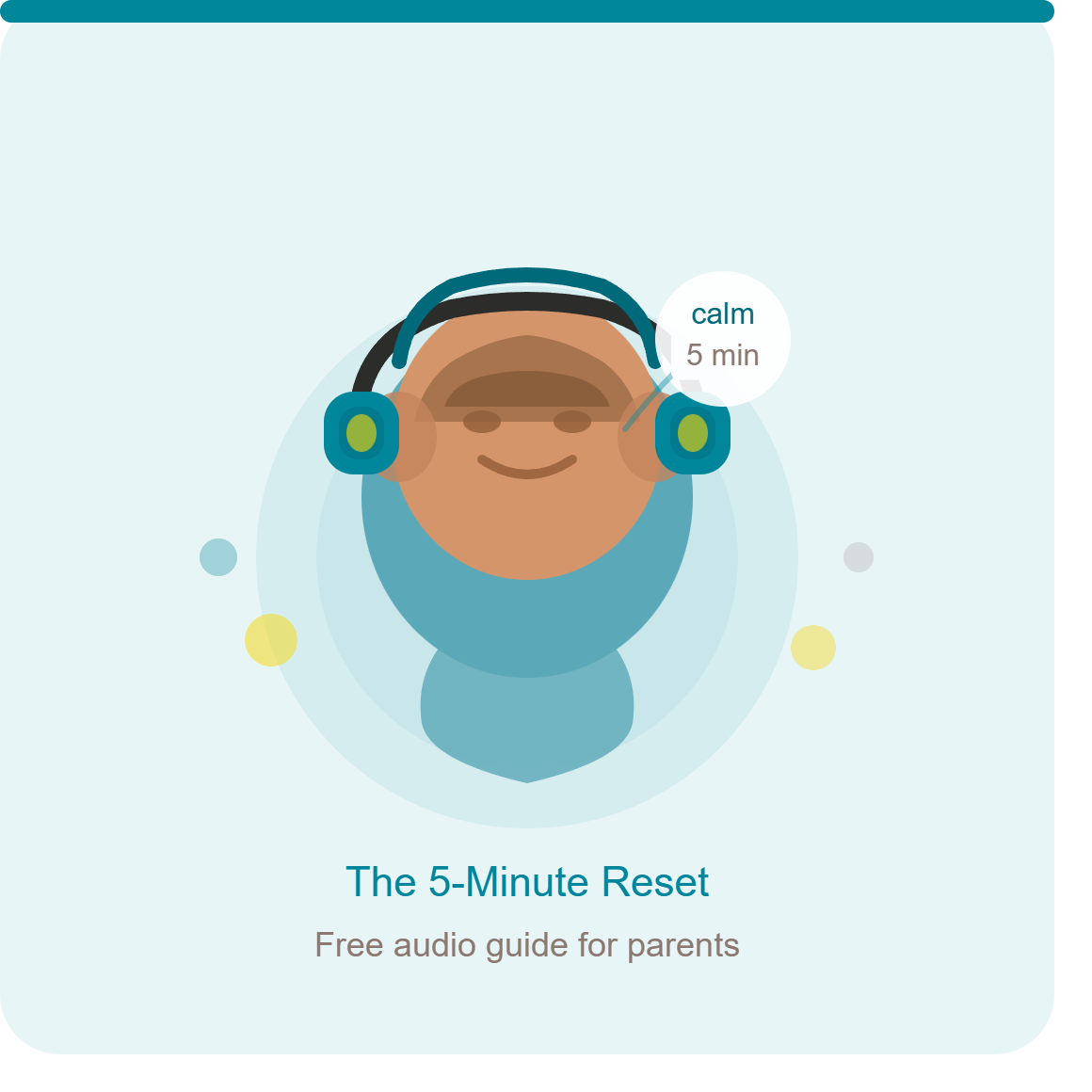
The 5-Minute Reset
Your free audio guide to the most chaotic 20 minutes of your parenting day.
The 5-Minute Reset is a free audio guide from Dr. Erica that helps you regulate your own nervous system so you can show up for your teenager with steadiness rather than fear, with presence rather than pressure, and with the kind of calm availability that makes them want to come to you even when they do not have to.
Free. Five minutes. No login required.
How to stay close to a teenager who is almost an adult
The college application process is not just stressful for them
How to talk about mental health with your teenager without making it worse
Why your teenager takes risks even when they know better
What your high schooler needs from you that they will never ask for
How to handle a teenager who seems completely checked out
The art of letting go without disappearing
How to talk about alcohol, drugs, and sex in a way they will actually hear
Why your teenager tells their friends things they will not tell you
How to support a teenager through a breakup
What to do when your teenager is struggling academically and hiding it
How to build a relationship with your teenager that survives the launch
The mental health signs in teenagers that parents miss most often
How to handle a teenager who is on their phone constantly
What your teenager actually thinks about you even when they act like they do not care
How to prepare your child for the realities of adult life without terrifying them
Why high school friendships feel so intense and what your child needs from you during them
The conversation every parent of a senior needs to have before they leave
How to support a teenager who knows what they want to do and one who has no idea
What a strong launch actually looks like and how you build it
No articles found for that search. Try a different word.
Four minutes. One thing you can try tonight.
Watch all Playful Patter videos on YouTube Link: youtube.com/@becomingplayful
These are organizations, books, and communities that Dr. Erica trusts and recommends for parents of teenagers ages fifteen to eighteen.
Child Mind Institute
Expert, compassionate articles on teen mental health, anxiety, depression, and how parents can help. An essential resource for any parent of a high schooler.
childmind.orgCenter for Parent and Teen Communication
Research-based tools specifically designed to help parents build stronger, more honest relationships with their high school age teenagers.
parentandteen.comCrisis Text Line
Free, confidential crisis support available by text for teenagers in distress. Available 24 hours a day from anywhere in the United States.
crisistextline.org Call: Text HOME to 741741988 Suicide and Crisis Lifeline
Call or text 988 to reach the national suicide and mental health crisis lifeline. Available 24 hours a day. Share this number with your teenager and keep it visible.
988lifeline.org Call: Call or text 988Untangled (Dr. Lisa Damour)
A clinical psychologist's guide to the seven transitions of adolescent girls. One of the most widely respected books for parents of teenage daughters.
Available at most librariesThe Teenage Brain (Dr. Frances Jensen)
A neuroscientist explains the adolescent brain in a way that is both scientifically rigorous and deeply humanizing. Essential reading for high school parents.
Available at most librariesCommon Sense Media
Research-backed guidance on social media, gaming, dating apps, and online safety for fifteen to eighteen year olds. Keeps parents informed without the alarmism.
commonsensemedia.orgNAMI
A helpline, community support, and practical resources for parents concerned about their teenager's mental health, including a guide for navigating mental health crises.
nami.orgPFLAG
A welcoming resource for parents of teenagers who may be questioning their gender identity or sexual orientation, with community, education, and advocacy support.
pflag.orgAnxiety and Depression Association of America
Resources for parents whose teenagers are struggling with anxiety or depression, including guidance on finding professional support.
adaa.orgCollege Board BigFuture
A free, comprehensive resource for navigating the college application process, financial aid, and the transition to post-secondary education.
bigfuture.collegeboard.orgHealthyChildren.org
Pediatrician-approved guidance on the social, emotional, and physical changes of the teen years, written for parents in plain language.
healthychildren.orgPractical tools for parents of high schoolers

$27 · For parents of high schoolers, ages 14 to 18 · 36-page PDF workbook, instant download
An honest, hopeful look at your relationship with your teen, before they leave.
High school can quietly turn a close relationship into a string of logistics. This workbook helps you take stock of what's working, what's worn thin, and where a few small changes would make the biggest difference, then turns what you learn into a plan.
What's inside
Self-scoring audits across five areas of a strong relationship
A repair inventory with a four-step way to make things right
A check on your own energy and your family's tech habits
A printable version for your teen to share their side
A results page, a connection plan, and a high school connection menu
This is for you if
You and your teen feel more like roommates than you'd like
You want to strengthen your relationship before they leave home
You're ready for an honest look, with support for what comes next
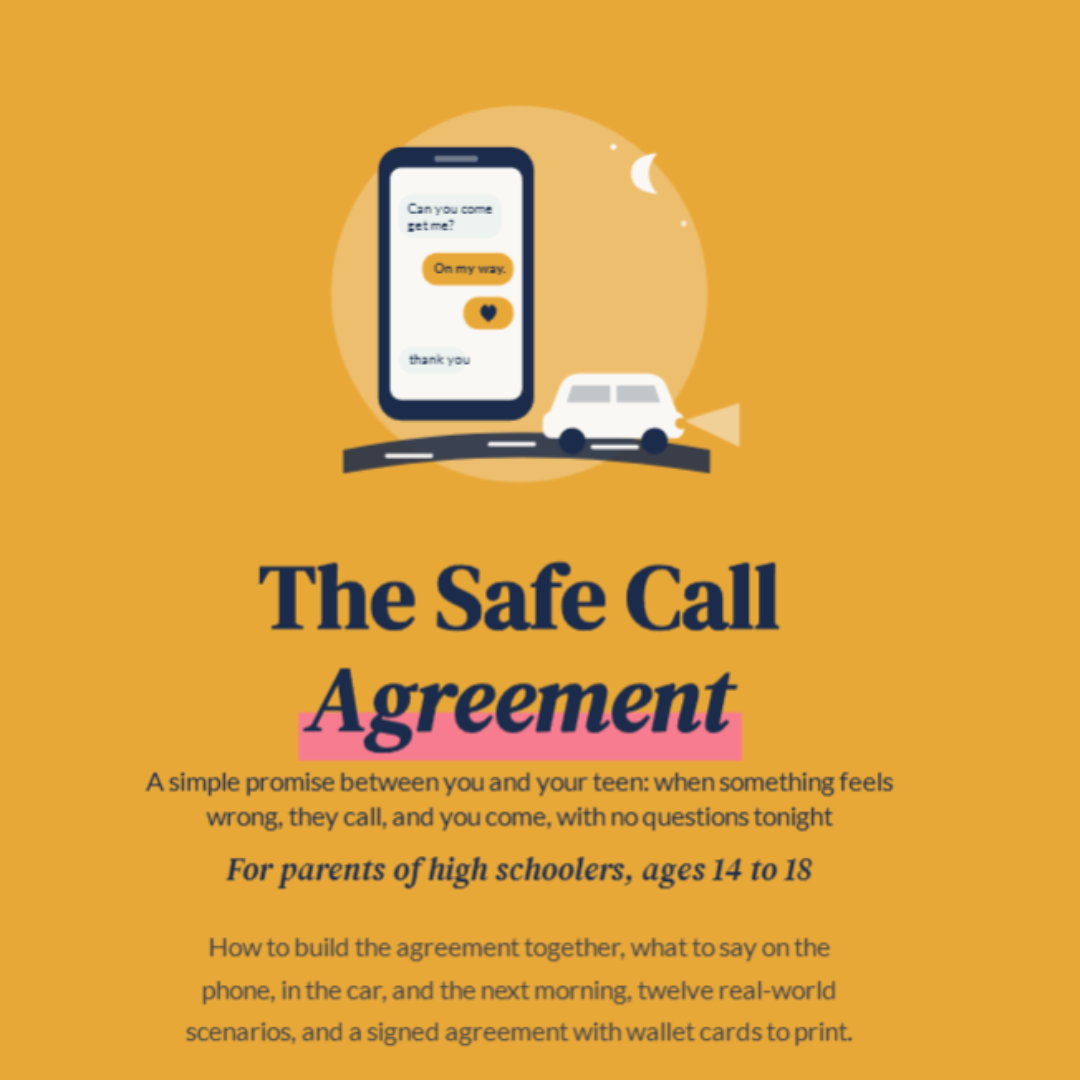
$10 · For parents of high schoolers, ages 14 to 18 · 31-page PDF with printable agreement and wallet cards, instant download
When something feels wrong, they call, and you come.
Many teens stay in unsafe situations because calling home feels worse than staying. This guide helps you change that with a simple, written promise made in advance: your teen calls, you come get them, and the questions wait until tomorrow.
What's inside
How the agreement works, and an honest answer to "But what about consequences?"
Eight decisions to make together, from code words to backup adults
What to say on the phone, in the car, and the next morning
Twelve real-world scenarios, each with what your teen does and what you say
A printable signed agreement and cut-out wallet cards
This is for you if
Your teen is starting to go to parties, drive, or ride with friends
You want to be their first call, not their last resort
You'd like a clear plan you both agree on before you need it
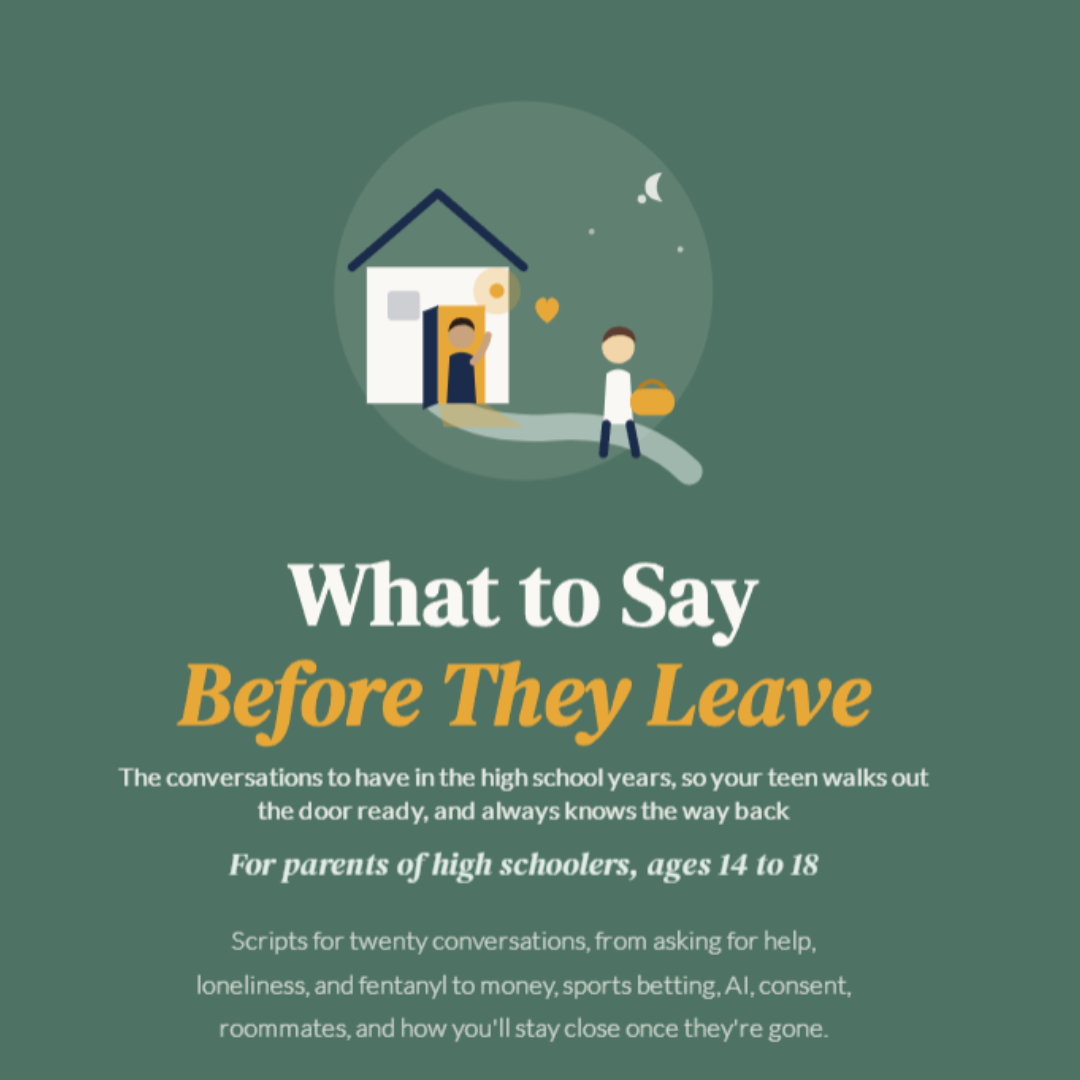
$17 · For parents of high schoolers, ages 14 to 18 · 44-page PDF, instant download
So your teen walks out the door ready, and always knows the way back.
You don't need one perfect talk before move-in day. You need many small conversations across the high school years. This guide gives you scripts for the twenty that matter most for young people leaving home today, whether they're headed to college, work, the military, a trade program, or a gap year.
What's inside
Scripts for 20 conversations, from asking for help and loneliness to fentanyl, money, sports betting, AI, consent, and roommates
A simple five-step method that gets teens thinking, not tuning out
A year-by-year guide to which talks to have when
The adult paperwork to set up at 18, and a before-you-go skills checklist
A launch plan, prompts for a letter in the suitcase, and wallet cards
This is for you if
The countdown to graduation has started and you're wondering what you've missed
You want your teen prepared for real-world situations, not just college applications
You want them to know they can always call home